
Pediatric Eye Surgery
Navigating the Operating Room: Common Pediatric Ophthalmology Surgeries
When a child faces an eye condition that requires surgery, it can be an anxious time for parents and caregivers. However, pediatric ophthalmic surgery is a highly specialized field dedicated to preserving a child’s vision, aligning their gaze, and ensuring their visual system develops properly.
Unlike adults, a child's visual system is still actively developing. Uncorrected issues can lead to amblyopia (lazy eye), a condition where the brain permanently suppresses input from an affected eye. Prompt surgical intervention when non-invasive methods fall short is often crucial to preventing lifelong vision loss.
1.Strabismus Surgery (Eye Muscle Alignment)
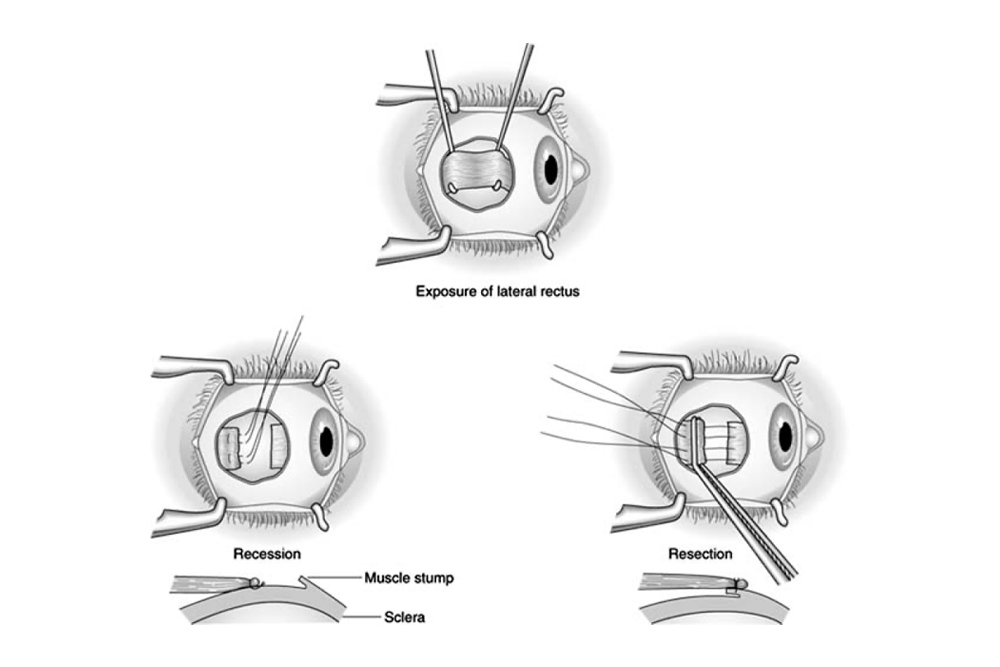
Strabismus is a misalignment where the eyes turn inward (esotropia), outward (exotropia), or vertically (hypotropia or hypertropia). When corrective glasses or patching fail to resolve the misalignment, surgery becomes necessary to align the eyes, retore lost depth perception, and to prevent progression of amblyopia.
- How it works: The surgeon makes a small incision in the conjunctiva (the clear tissue covering the white of the eye) to access the extraocular muscles. They then perform a recession (weakening a muscle by moving its attachment further back) or a resection (strengthening a muscle by shortening it) to change the pull on the eye.
- Anesthesia: Performed under general anesthesia so the child remains completely still and pain-free.
- Outcome: Most procedures are outpatient, and children typically return to normal activities within a few days, though their eyes may look red for a couple of weeks.
2. Nasolacrimal Duct Obstruction Repair (Blocked Tear Ducts)
It is common for infants to be born with an underdeveloped tear drainage system, leading to constant watery eyes, crusting, and recurrent mild infections. While over 90% of these cases resolve on their own by a child’s first birthday, persistent blockages require a minor procedure.
- How it works: A pediatric ophthalmologist uses a thin, blunt metal probe to gently clear the thin membrane blocking the tear duct. If the duct collapses or is severely narrowed, they may use a balloon catheter to dilate the passage or place tiny silicone stents (tubes) temporarily to keep it open.
- Anesthesia: Performed under general anesthesia so the child remains completely still and pain-free.
- Outcome: This is a brief outpatient procedure, often taking less than 15 minutes, with immediate relief from chronic tearing.
3. Pediatric Cataract Removal
While cataracts—the clouding of the eye’s natural lens—are traditionally associated with aging, they can be congenital (present at birth) or develop during childhood due to trauma or genetic metabolic conditions. Because a clear lens is vital for a child’s brain to learn how to see, pediatric cataracts require urgent action. Amblyopia (loss of vision) occurs rapidly with pediatric cataracts.
- How it works: The surgeon removes the cloudy natural lens. Depending on the child's age, they may implant an artificial intraocular lens (IOL) during the same surgery. For infants under a certain age, the surgeon may leave the eye without a lens (aphakic) temporarily, using specialized contact lenses or glasses until the eye grows enough to safely house an IOL.
- Anesthesia: Performed under general anesthesia so the child remains completely still and pain-free.
- Post-Op Care: Intensive follow-up is critical, involving patching therapy to ensure the brain rebuilds its connection with the treated eye.
4. Congenital Ptosis Repair (Drooping Eyelid)
Ptosis occurs when the muscle responsible for lifting the upper eyelid (the levator muscle) is weak from birth. If the eyelid droops low enough to block the pupil or to cause the development of astigmatism, it obstructs the child's field of vision and can disrupt normal visual development.
- How it works: For mild to moderate weakness, the surgeon shortens or tightens the levator muscle to lift the lid. For severe weakness where the levator muscle barely functions, a frontalis sling procedure is performed. This connects the eyelid to the brow muscles using a small strip of material, allowing the child to lift their eyelid by raising their eyebrows.
- Anesthesia: Performed under general anesthesia so the child remains completely still and pain-free.
- Outcome: Protects the child's clear line of sight while improving symmetry between the eyes. Allows for recovery of lost vision (amblyopia) through patching or glasses.
5. Chalazion (stye) Removal
A chalazion excision is a quick, minor surgical procedure to remove a persistent, non-infected bump on the eyelid (a chalazion) caused by a blocked oil gland. When a chalazion hasn't cleared up after several months of warm compresses or drops, an ophthalmologist may recommend this to prevent vision changes or chronic irritation.
Because children cannot easily remain completely still during a delicate procedure near the eye, the approach is tailored for their safety and comfort.
How the Procedure Works
Unlike adults who usually get this done under local anesthesia in an office chair, children almost always receive brief general anesthesia in an operating room or surgery center. This ensures they are completely asleep, pain-free, and won't make sudden movements.
- Anesthesia and Numbing: Pre-op. The child is gently put to sleep with general anesthesia. The surgeon also injects a local numbing medication into the eyelid so they wake up pain-free.
- Eyelid Eversion: 5 mins. The surgeon uses a small clamp to flip the eyelid inside out. The surgery is almost always done from the inside of the lid, meaning there will be no visible skin scars. Large chalazia or those where the skin is already ruptured may be approached externally.
- Incision and Drainage: 10 mins. A tiny vertical incision is made on the inside of the lid. The trapped, waxy oil gland contents are carefully cleared out (curettage). For external surgeries, the skin is incised horizontally and the dead skin is removed. In these cases, the skin is sutured closed with a few small stitches that will dissolve in about a month.
- Post-op Dressing: For internal chalazia, the incision is on the inside and tiny, therefore it typically does not require stitches. For external chalazia, a few small dissolvable sutures are used to close the skin. An antibiotic ointment is applied, but typically no patch or covering is required.
A Note on Recurrence: While excision removes the current blockage, it doesn't change the child's underlying skin or oil type. Omega 3 fatty acids (fish oil, flax seed oil) and good eyelid hygiene (like daily warm compresses or lid wipes) are often recommended afterward to keep new chalazia from forming.
The Pediatric Surgical Experience: What to Expect
[Pre-Op Prep & Fasting] ➔ [General Anesthesia] ➔ [Precision Microsurgery] ➔ [Post-Op Recovery Room]
Unlike adult eye surgeries, which are routinely performed using local numbing drops while the patient is awake, almost all pediatric eye surgeries require general anesthesia. This ensures the child remains entirely still, eliminating the risk of accidental injury during delicate microscopic procedures.
Pediatric surgical teams feature specialized pediatric anesthesiologists who tailor medications specifically for a child's weight and development. Parents are provided strict fasting guidelines (usually no solid foods after midnight and only clear liquids up to two hours before arrival) to keep the anesthesia process as safe as possible.
Post operative care
Modern pediatric ophthalmology relies on minimally invasive techniques, meaning most procedures are outpatient. Children typically head home the very same day to recover in the comfort of their own beds, with their sight well-protected for the future.
Most children need only Tylenol or ibuprofen for pain following eye or eyelid surgery: consult the directions on the label for proper dosing based on your child’s age or weight.
It is important to use your eye drop or ointment medication as prescribed to minimize risk or infection and to reduce swelling and discomfort. A tutorial on how to put eyedrops into a child’s eye:
Cold packs can also be helpful to reduce pain and swelling.
Most complications come with obvious signs such as increasing swelling, worsening vision, discharge from the eye, or increasing pain. It’s always best to call your doctor if you are concerned.
Quick Links
Helpful Articles
All Eye Care Services
Find personalized eye care excellence with our comprehensive services. From eye exams to advanced diagnostics, trust us for all your vision needs.
Keep In Touch
For non-urgent questions or to learn more about our services, contact us today!
© 2026 Children's Eye Care. All rights Reserved - Accessibility Statement - Privacy Policy - Sitemap
Managed and Designed by 