
Myopia Management
What Is Myopia?
Myopia (or nearsightedness) is so common that nearly 50% of North Americans will have myopia by 2030. Myopia happens when the eye grows too fast, too long, and gets weaker. You may know it as blurry vision far away. At our practice, we specialize in pediatric eye care and treat myopia seriously.
Myopia can develop as young as age 3, and it often gets worse as children grow. Parents may not see signs that their child has myopia, such as squinting or having to sit up close to the television or computer screen to see clearly. Children often don’t realize their vision is blurry.
The heavy use of digital devices is not going away and certainly is not helping things. It is important to follow the 20/20 rule (also known as the 20/20/20 rule): for every 20 minutes of close work, take a 20 second break where you look 20 or more feet away for 20 seconds. This rule should be followed not only for screens at near, but all near work including reading from traditional books, coloring, writing, etc. Children should also spend at least 60 minutes outside each day.
The younger your child, the faster their myopia tends to progress. Early and regular pediatric eye exams are essential for detecting myopia as soon as possible. Treating it early can help slow its progression and reduce the risk of serious eye health issues later in life (see treatments below).

Myopia Can Affect More Than Just Your Eyes
Myopia can affect your child’s ability to perform well in school, sports, performing arts, and other activities that require clear vision. Controlling myopia progression will free them up to be at their best.
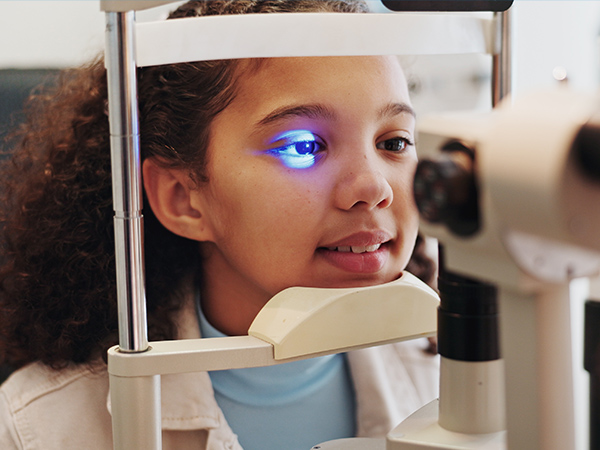
If you believe that your child may have myopia, contact our office to schedule a pediatric eye exam - this is the best first step to take.
Types of Myopia Control
Our job is to protect your child’s vision from getting worse as they grow, using the most appropriate treatment.
MiSight® 1 day is a dual focus soft contact lens that is the only FDA-approved myopia control treatment to provide clear vision while simultaneously slowing the worsening of myopia. It was designed for young children, and its safety and efficacy are supported by a 7-year study and hundreds of thousands of patients.
Orthokeratology (Ortho-K) contact lenses temporarily reshape the cornea overnight. Upon removal in the morning, nearsightedness is corrected, delivering clear vision all day long. It is a great option for those who want freedom from daytime glasses and contact lenses, and especially swimmers and water polo players. These lenses must be worn each night to maintain clear vision.
Low-dose atropine eyedrops are instilled each night to slow the growth of the eye. Side effects may include mild dilation of the pupils and a temporary reduction in the eye’s focusing ability at near, but most children do not have these side effects.
Be Free Day soft contact lenses were designed in conjunction with the Brien Holden Vision Institute (BHVI) to specifically slow myopic progression in children with school age myopia. They are a daily disposable silicone hydrogel technology lens that is worn during the day to slow myopic progression.
Glasses with special lens material can also help slow myopia progression. Stellest® lenses are the only type of myopia control glasses lens available in the US. Three other types of lenses, MiyoSmart®, SightGlass®, and MyoCare®, may become available in the future, and are currently available in Asia, Canada, and much of Europe.
It is important to realize that none of these treatments reverse myopia permanently. The goal of each of the treatments is to slow progression, to reduce the final amount of myopia compared to what it would have been had nothing been done. Lasik or other laser surgical treatments can permanently treat the myopia, but are not available until age 18 at the earliest, after the eyes have stopped changing.
Schedule Your Child’s Eye Exam Today
If you notice that your child is having a difficult time seeing objects that are far away, contact us to schedule an appointment. Treating myopia as quickly as possible can help to reduce your child’s chances of developing a serious eye condition that can threaten their ability to see the world around them. Call today and schedule a pediatric eye exam to discover how we can help your child.
Quick Links
Helpful Articles
All Eye Care Services
Find personalized eye care excellence with our comprehensive services. From eye exams to advanced diagnostics, trust us for all your vision needs.
Keep In Touch
For non-urgent questions or to learn more about our services, contact us today!
© 2026 Children's Eye Care. All rights Reserved - Accessibility Statement - Privacy Policy - Sitemap
Managed and Designed by 